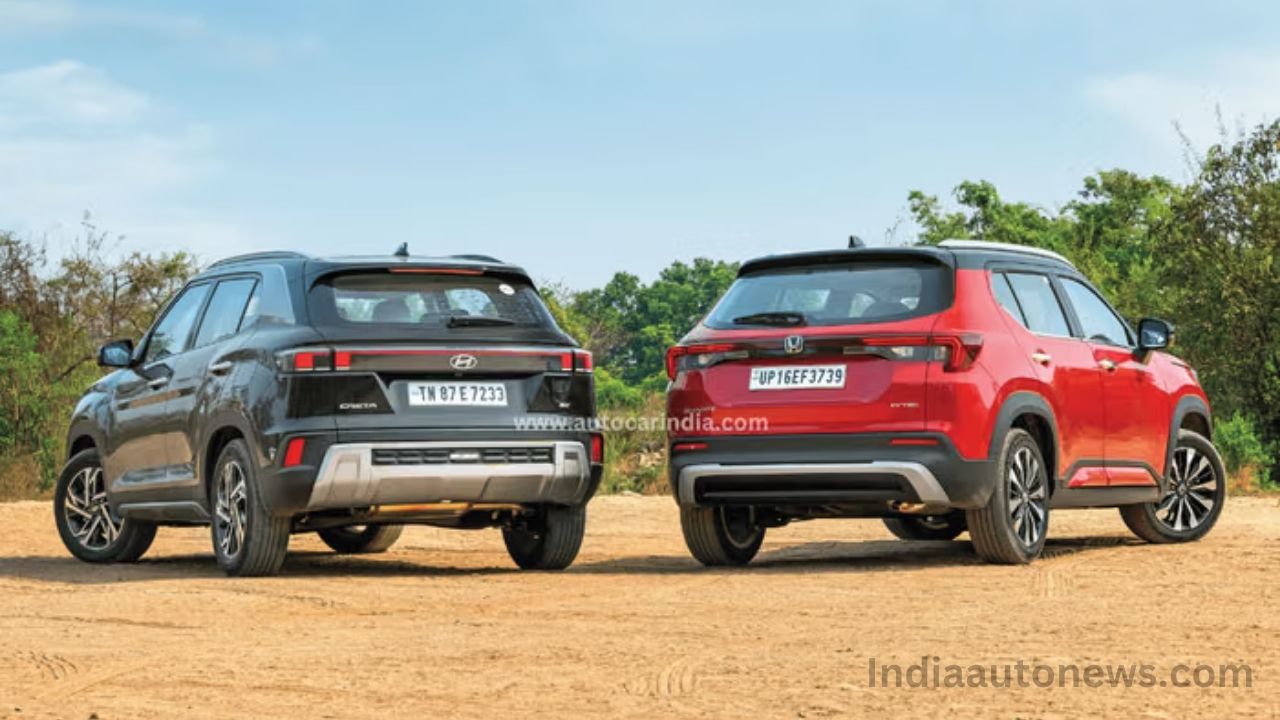
Hyundai Creta vs Honda Elevate CVT – The Indian market for midsize SUVs is full of alternatives with petrol-CVT combinations, and the Hyundai Creta CVT along with the Honda Elevate CVT are among the foremost contenders. Also, they both employ a 1.5-litre naturally aspirated gasoline engine and cater to the same buyers. Yet, between these two SUVs regarding real-world efficiency, fuel economy and highway capability one is a clear winner. We present here a thorough performance comparison that will help you decide which SUV is better for everyday use.
Also Read: Top 5 Cruiser Bikes Under Rs 3 Lakh – Best Options in India 2025
Specification and Price Comparison
When it comes to numbers, the Honda Elevate enjoys a very modest edge. Its 1.5-litre engine has an output of 121hp and 145Nm, which is just a little more than Creta’s 115hp and 144Nm. Additionally, the Elevate is 24kg lighter, which results in better power-to-weight and torque-to-weight ratios.
Furthermore, the Elevate benefits from cheaper CVT variants but on the other hand the Creta’s range has features that are luxuriously accommodating for the uppermost trims thus making it the more premium option in terms of features.
0–100 km/h Acceleration Performance
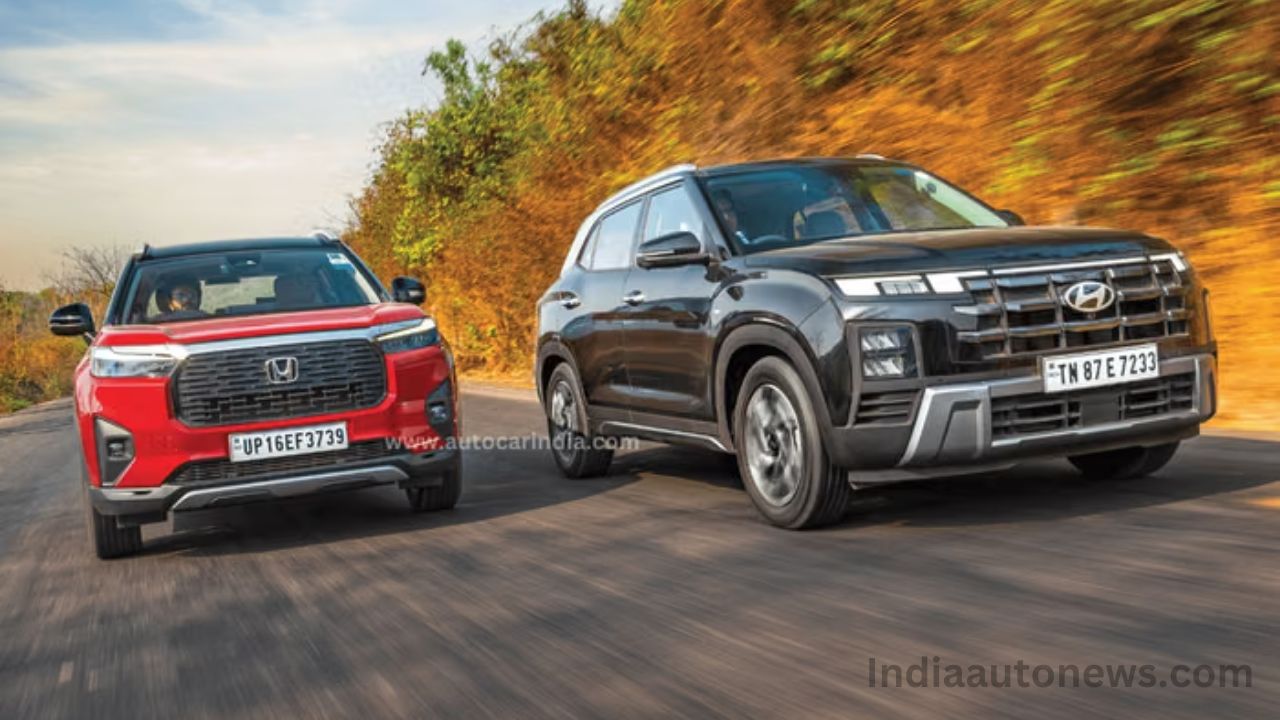
The acceleration figures are very much in the Elevate’s favor. From the very start, the car is just ahead. The Creta’s time to reach 100 km/h is 13.73 seconds while the Honda is only 11.89 seconds behind. When the two cars hit 120 km/h, the Honda has already pulled ahead by 2.83 seconds, which is an indication of its better high-speed performance.
If quick highway actions and robust mid-range acceleration are your priorities, the Elevate is going to feel significantly faster and more responsive to your commands.
Rolling Acceleration (Kickdown Tests)
The rolling acceleration tests are a good reflection of actual driving conditions such as overtaking. Even here, the Elevate CVT keeps its lead. The time recorded for the Elevate is 6.91 seconds in the 20-80 km/h test, while for the Creta it is 7.68 seconds. In the 40-100 km/h test, the Elevate is 8.55 seconds in, while the Creta is 9.67 seconds.
This situation in the daily driving means that the Elevate is able to take over faster in case of sudden cuts, especially when the car is fully loaded or during the luggage trip.
Braking Tests
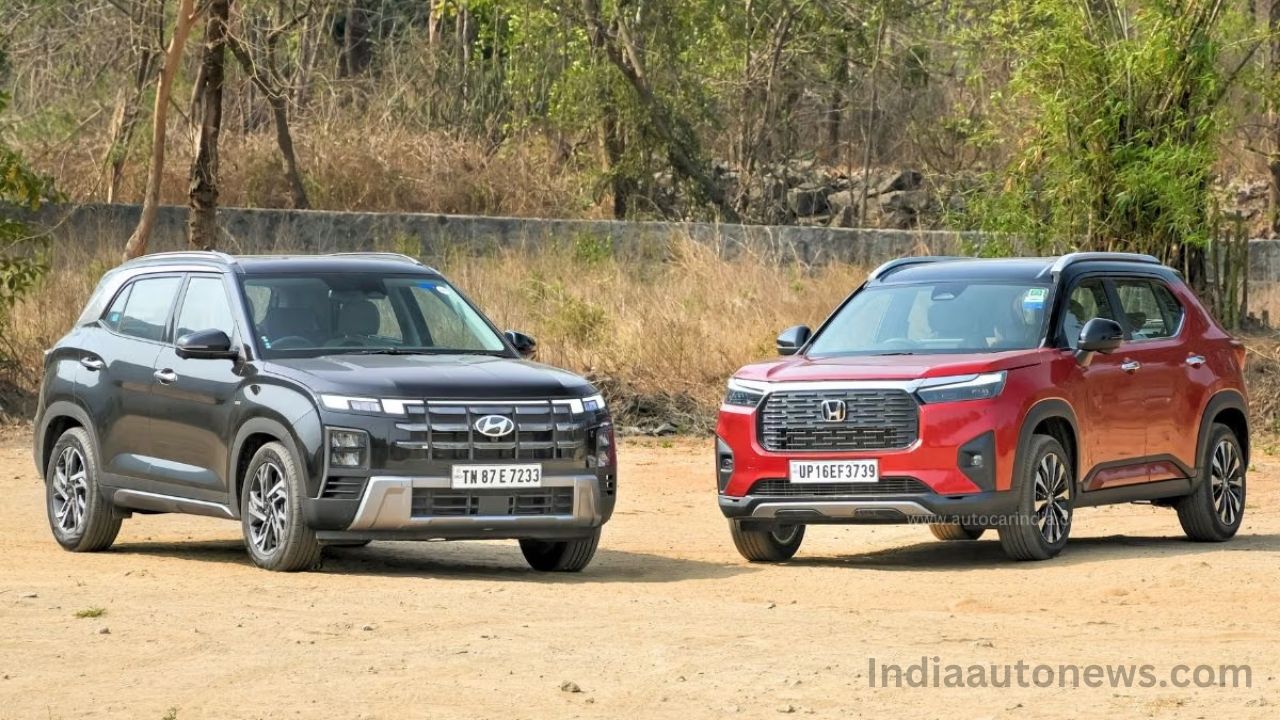
Performance is not only measured by the speed it gains but also by the speed it loses. In an emergency stop from 80 to 0 km/h, the Elevate again flags ahead.
It runs the distance of 24.97 meters against the 28.42 meters of the Creta and the 1.93 seconds difference in time to stop is in favor of the Elevate.
The seemingly insignificant weight of the Elevate is a major factor contributing to this outcome.
Final Verdict
The two SUVs are smooth, refined, and family-friendly, but the Honda Elevate CVT makes a strong case with pure metric numbers against the Hyundai Creta CVT.
The Elevate has a more exciting experience in terms of quicker acceleration, shorter braking distance and better overtaking manners, making it the preferred SUV for performance-oriented drivers in a naturally aspirated petrol-CVT setup.
The Creta still is a great option for those who expect a car with many features in the interior and a more upscale overall experience, even though it falls a bit short in the performance aspect.